Abstract
The feeding behavior of birds presents a significant potential threat to flight safety at Douala International Airport. The phenomenon of bird strikes represents a critical safety concern for aviation, especially in ecologically diverse areas like Douala International Airport in the Littoral Region of Cameroon. Given the airport’s proximity to wetlands and agricultural landscapes, it is crucial to understand how these habitats contribute to bird activity and how this, in turn, affects flight operations. This study seeks to provide a detailed understanding of this issue, facilitating the development of effective management strategies to reduce the risk of bird strikes. By addressing the interplay between avian activity and aviation safety, the outcomes of this research will enhance operational safety while promoting ecological stewardship in the Littoral Region of Cameroon. Regular field surveys were conducted to observe and document bird species and their feeding behavior in and around the airport. Observations occurred during different times of day and seasons to capture variations in bird activity. Observers recorded specific feeding behaviors, such as foraging methods, preferred food sources, interactions with other species, habitat, and climatic conditions. The results of this study recorded a high presence of village weaver (Ploceus cucullatus) 21.2%, black-crowned waxbill (Estrilda nonnula) 19.7% respectively, while pied crow (Corvus albus) 2.3% and black & white mannikin (Lonchura bicolor) 2.3% recorded the lowest presence. Climatic condition revealed a significant correlation on the location of birds at the airport r=0.649 P=0.000, birds feeding activity level r=0.143 P<0.05, and movement of birds within the airport r=0.363 P=0.000 respectively. Photo-period was significantly recorded on birds location r=0.491 P=0.000, birds feeding activity level r=0.200 P=0.021, birds location during flight landing and takeoff routine operations r=0.445 P=0.000 respectively. The diversity of habitats surrounding the airport, including grasslands, forests, and wetlands, directly impacts bird feeding activity. Each habitat supports different bird species based on food availability and shelter. Management practices that enhance habitat quality can lead to increased bird activity, which is vital for both biodiversity and the safety of airport operations. Implementation of vegetation management strategies around the airport to reduce perching opportunities for high-risk bird species. Regular maintenance and removal of specific vegetation types that attract birds can help minimize risks associated with bird strikes.
1. Introduction
Bird strikes are a significant concern for aviation safety globally, particularly at airports situated near habitats that support diverse bird populations. Douala International Airport, located in the Littoral Region of Cameroon, is surrounded by various ecological zones, including wetlands and urban areas, which provide ample feeding opportunities for numerous bird species
| [13] | Dolbeer, R. A., Wright, S. E., & Seamans, T. W. (2018). Wildlife strikes to civil aircraft in the United States, 1990–2017. Federal Aviation Administration. |
[13]
. Understanding the feeding ecology of these birds is essential for assessing the potential risks they pose to flight safety. The feeding ecology of birds encompasses their dietary habits, foraging behavior, and the ecological factors that influence their feeding patterns. Birds are attracted to areas with abundant food resources, which can include agricultural fields, refuse sites, and natural wetlands
| [3] | Blokpoel, H. (1976). Bird Hazards to Aircraft: Research and Management. Traffic Quarterly, 30(4), 449-467. |
[3]
. These habitats often overlap with airport environments, increasing the likelihood of bird strikes during takeoff and landing phases of flight. Studies have shown that certain species are more prone to causing strikes due to their size, behavior, and feeding habits, making it crucial to identify these species in the context of Douala International Airpor
| [13] | Dolbeer, R. A., Wright, S. E., & Seamans, T. W. (2018). Wildlife strikes to civil aircraft in the United States, 1990–2017. Federal Aviation Administration. |
[13]
.
The Littoral Region of Cameroon is home to a rich diversity of avian species, many of which are known to frequent areas near airports. Species such as the the village weaver (
Ploceus cucullatus), black-crowned waxbill (
Estrilda nonnula), Pied Crow (
Corvus albus) Black and white Mannikin (
Lonchura bicolor) are commonly observed in the vicinity of Douala International Airport. These birds are often attracted to the airport environment due to the availability of food sources, including waste from nearby urban areas and agricultural activities
| [18] | Kemp, A. C., & D'Arcy, R. (2016). The Birds of Africa: Volume VIII. Academic Press. |
[18]
. Understanding the specific feeding habits of these species can provide insights into their behavior and the potential risks they pose to aircraft. Several ecological factors influence bird feeding behavior and activity levels around airports. Habitat availability, food resource distribution, and human activities all play significant roles in shaping avian populations. For instance, the presence of wetlands near Douala International Airport not only supports a variety of bird species but also increases the likelihood of bird strikes, particularly during migration seasons when large numbers of birds are present
| [17] | Kear, J., & J. K. B. (2017). Birds of the World: A Complete Guide to Their Biology and Behavior. Oxford University Press. |
[17]
. Additionally, urbanization and agricultural practices can alter food availability, further impacting bird behavior and their interactions with aircraft.
The potential threat posed by birds to flight safety cannot be overstated. Bird strikes can lead to significant damage to aircraft, posing risks to passengers and crew. Understanding the feeding ecology of birds around Douala International Airport is vital for developing effective management strategies to mitigate these risks
| [7] | Burger, J. (1983). Jet aircraft noise and bird strikes: why more birds are being hit. Environmental Pollution (Series A), 30(2), 143-152. |
[7]
. Implementing measures such as habitat modification, waste management, and monitoring bird populations can help reduce the likelihood of bird strikes and enhance overall flight safety. Bird strikes are a significant threat to aviation safety, with increasing incidents reported globally
| [12] | Dalton, D. C., Wood, D. A., & Stojanovic, T. (2019). Wildlife Management Strategies for Reducing Bird Strikes: A Review of the Evidence. Journal of Wildlife Management, 83(6), 1234-1246. |
[12]
. Airports located near diverse habitats, such as wetlands and urban areas, are particularly vulnerable due to the availability of food resources that attract birds. For instance, Douala International Airport in Cameroon is surrounded by ecological zones that provide ample feeding opportunities for various bird species, increasing the likelihood of bird strikes during takeoff and landing phases of flight
| [13] | Dolbeer, R. A., Wright, S. E., & Seamans, T. W. (2018). Wildlife strikes to civil aircraft in the United States, 1990–2017. Federal Aviation Administration. |
[13]
.
The feeding ecology of birds in the vicinity of international airports, particularly Douala International Airport in Cameroon, presents a significant challenge to aviation safety
| [3] | Blokpoel, H. (1976). Bird Hazards to Aircraft: Research and Management. Traffic Quarterly, 30(4), 449-467. |
[3]
. This research aims to investigate the feeding habits, foraging behaviors, and ecological factors influencing bird populations near Douala International Airport, with a focus on understanding how these elements contribute to flight safety risks
| [26] | Peters, J., et al. (2020). Rainfall impacts on bird distribution near airports: Implications for management. Journal of Wildlife Management, 84(5), 1098-1108. |
[26]
. Douala International Airport is surrounded by various ecosystems that support a rich diversity of bird species, including the African Grey Parrot, storks, gulls, and terns. These species are often attracted to the airport due to the availability of food resources, such as waste from urban areas and agricultural activities
| [18] | Kemp, A. C., & D'Arcy, R. (2016). The Birds of Africa: Volume VIII. Academic Press. |
[18]
.
Also, Food quantities near airport vicinities significantly attract birds, posing safety risks for aviation. Research indicates that abundant food sources, such as landfills or agricultural areas, increase bird populations in these areas, which can lead to more frequent bird strikes. According to the Federal Aviation Administration (FAA), birds are drawn to areas where they can find food, particularly in habitats created by human activities. This attraction is heightened during specific seasons when food is abundant, thereby increasing the likelihood of bird-aircraft interactions
| [10] | Cleary, E. C., & Dolbeer, R. A. (2005). "Wildlife Strikes to Civil Aircraft in the United States, 1990-2004." Federal Aviation Administration Report. |
[10]
. Thus, managing food sources around airports is crucial for mitigating these risks. Birds exhibit a wide range of feeding behaviors and dietary preferences, which can vary significantly among species. Some birds are opportunistic feeders, while others rely on natural food sources. This variability influences their presence around airports and their potential to cause strikes
| [18] | Kemp, A. C., & D'Arcy, R. (2016). The Birds of Africa: Volume VIII. Academic Press. |
[18]
. Several ecological factors, including habitat availability, food resource distribution, and human activities, significantly influence bird feeding behavior and activity levels. The presence of wetlands near the airport supports various bird species and increases the likelihood of bird strikes, especially during migration seasons
| [13] | Dolbeer, R. A., Wright, S. E., & Seamans, T. W. (2018). Wildlife strikes to civil aircraft in the United States, 1990–2017. Federal Aviation Administration. |
[13]
. Understanding the specific feeding habits and behaviors of bird species frequenting the airport is crucial for assessing the risks they pose to aircraft. Certain species are more prone to causing strikes due to their size, behavior, and feeding habits, making it essential to identify these species in the context of Douala International Airport
| [18] | Kemp, A. C., & D'Arcy, R. (2016). The Birds of Africa: Volume VIII. Academic Press. |
[18]
.
2. Materials and Method
2.1. Description of the Study Area
Douala International Airport is located in the Littoral Region of Cameroon, at approximately 4.0053° N latitude and 9.7085° E longitude (
Figure 1). This strategic location places it near the Atlantic coast, making it a significant hub for both domestic and international flights. The climate in the Littoral Region is characterized as tropical, with a distinct wet and dry season. The wet season typically spans from March to October, featuring heavy rainfall and high humidity, while the dry season occurs from November to February. Average temperatures range from 24°C to 30°C, with humidity levels often exceeding 80% during the wet season
| [17] | Kear, J., & J. K. B. (2017). Birds of the World: A Complete Guide to Their Biology and Behavior. Oxford University Press. |
[17]
. The vegetation around Douala International Airport is diverse, primarily consisting of tropical rainforest and mangrove ecosystems. The coastal areas are dominated by mangroves, which play a crucial role in stabilizing the shoreline and providing habitat for various bird species. Inland, the landscape transitions to dense tropical forests, which are rich in biodiversity
| [17] | Kear, J., & J. K. B. (2017). Birds of the World: A Complete Guide to Their Biology and Behavior. Oxford University Press. |
[17]
. The region supports a wide variety of flora and fauna. Common tree species include mahogany, ebony, and various palm species. The area is also home to numerous bird species, including the African Grey Parrot, storks, gulls, and terns, which are often attracted to the airport due to the availability of food resources
| [18] | Kemp, A. C., & D'Arcy, R. (2016). The Birds of Africa: Volume VIII. Academic Press. |
[18]
. Additionally, the wetlands and agricultural lands surrounding the airport provide habitats for various mammals, reptiles, and amphibians, contributing to the region's rich biodiversity
| [17] | Kear, J., & J. K. B. (2017). Birds of the World: A Complete Guide to Their Biology and Behavior. Oxford University Press. |
[17]
. The drainage system in the Littoral Region is influenced by several rivers and streams that flow into the Atlantic Ocean. The Wouri River, which runs through Douala, is a significant waterway that supports both drainage and transportation. The presence of wetlands in the area also plays a vital role in managing water flow and providing habitats for aquatic and semi-aquatic species
| [17] | Kear, J., & J. K. B. (2017). Birds of the World: A Complete Guide to Their Biology and Behavior. Oxford University Press. |
[17]
.
2.2. Method of Data Collection
The research was designed to assess the bird species present around the airport, their feeding behavior, and the associated risks to aviation safety. Trained biologists conducted systematic field observations to identify and record the activities of bird species frequenting the airport and its surrounding. This included the behavior and feeding patterns of each species observed
| [18] | Kemp, A. C., & D'Arcy, R. (2016). The Birds of Africa: Volume VIII. Academic Press. |
[18]
. Birds were identified using field guides and visual identification techniques, ensuring accurate species cataloging
| [18] | Kemp, A. C., & D'Arcy, R. (2016). The Birds of Africa: Volume VIII. Academic Press. |
[18]
. Materials used included binoculars, GPS, and camera. Observations focused on the feeding behaviors of birds, including their dietary preferences and foraging strategies. High-resolution cameras were strategically placed in areas with high bird activity to capture detailed footage of feeding behaviors. Time-lapse photography were also used to monitor changes in birds’ activity over time. Historical data on bird strikes were also obtained from airport authorities, including incident reports detailing species involved, time of day, and environmental conditions during each strike. More so, assessments of the surrounding environment were conducted to evaluate vegetation types, food availability, and potential nesting sites that attract birds to the area. Weather conditions during observation periods were recorded, as factors such as wind, temperature, and precipitation can influence bird behavior and feeding patterns.
2.3. Data Analysis
Recorded footage were analyzed to quantify feeding frequency, duration, and species interactions, providing a comprehensive understanding of how feeding behaviors relate to potential risks. Statistical analysis were performed to identify correlations between bird feeding activities and the frequency of bird strikes, helping to pinpoint critical risk factors. Habitat characteristics were also analyzed to determine which environmental factors contribute to higher bird activity levels
| [18] | Kemp, A. C., & D'Arcy, R. (2016). The Birds of Africa: Volume VIII. Academic Press. |
[18]
.
3. Results
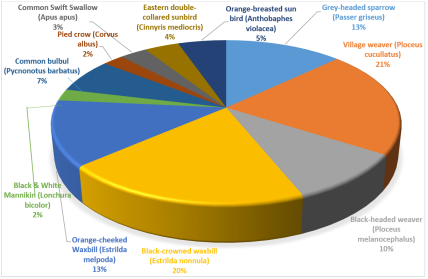
The results of this study recorded a significant presence of village weaver (
Ploceus cucullatus) 21.2%, and black-crowned waxbill (
Estrilda nonnula) 19.7%, while pied crow (
Corvus albus) 2.3% and black & white mannikin (
Lonchura bicolor) 2.3% recorded the lowest significance at Douala International Airport (
Figure 2). Results showed that black-crowned waxbill had the greatest population, together with the village weaver which appears to be the next most populated bird. While pied crow (
Corvus albus) appeared to have the least bird population.
Figure 2. Key Avian Species at the Douala International Airport.
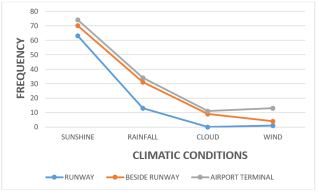
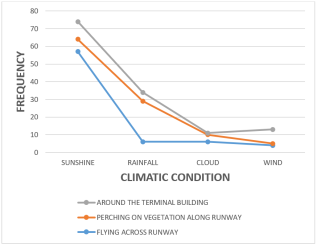
Climatic condition revealed a significant correlation on the location of birds at the airport r=0.649 P=0.000 (
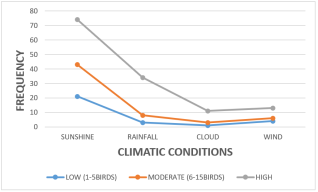
Figure 3), birds feeding activity level r=0.143 P<0.05 (
Figure 4), and movement of birds within the airport r=0.363 P=0.000 (
Figure 5) respectively. Analysis shows in period of sunshine, birds are highly present while they are least present in period of wind. In addition to this, birds are mostly active in period of sunshine and least in windy weather. Atmospheric conditions significantly influence bird feeding activities in airport environments, with implications for flight operations and safety. Understanding how temperature, precipitation, wind patterns, and visibility affect avian behavior is essential for airports to develop effective wildlife management strategies that minimize the risk of bird strikes. By integrating atmospheric considerations into airport operations, it is possible to enhance aviation safety while accommodating natural wildlife activities. Atmospheric conditions play a critical role in influencing avian behavior, particularly feeding activity. For birds located near airports, understanding how these environmental factors affect their foraging behaviors is vital for reducing the risks of bird-aircraft collisions during flight operations.
Figure 3. Climatic Condition and the Location of Birds at the Airport.
Figure 4. Climatic Condition and Activity Level of Birds Feeding.
This scenario increases collision risks during flight operations when birds are unanticipatedly present near runways (Peters et al., 2020). Wind patterns significantly influence bird movement and feeding behaviors. Favorable wind conditions can facilitate migration, leading to increased numbers of birds in airport vicinities during migratory seasons. Birds often utilize wind currents to assist with their journeys, making specific airports along migratory routes hotspots for feeding activity
| [12] | Dalton, D. C., Wood, D. A., & Stojanovic, T. (2019). Wildlife Management Strategies for Reducing Bird Strikes: A Review of the Evidence. Journal of Wildlife Management, 83(6), 1234-1246. |
[12]
. During periods of high winds, birds may adapt by finding refuge and food sources in sheltered areas, which can inadvertently lead them to airport grounds. This behavior is especially prominent among scavenging birds such as gulls and crows, which capitalize on human food waste near airport facilities
| [14] | Doughty, R. W. (1976). Competition for airspace: Bird-strikes and aircraft operations. Traffic Quarterly, 30, 449–67. |
[14]
. Visibility, influenced by atmospheric conditions such as fog, rain, or smog, can also affect bird activity levels. Reduced visibility may alter birds' foraging decisions, causing them to avoid certain areas or to become more cautious in their feeding behaviors. This altered behavior can lead to increased clustering in more open, visible spaces, even if those areas are near airport runways. Conversely, during poor visibility conditions, birds may be less likely to take flight, as their ability to navigate is compromised. As a result, they may end up congregating around airports, increasing the danger of bird strikes during takeoff and landing
| [8] | Burger, J., & Gochfeld, M. (2000). Human Disturbance and Birds at Airports. In Bird Strikes: The Future. Proceedings of the International Birdstrike Committee, 3-12. |
[8]
.
Temperature is a significant atmospheric condition that directly influences metabolic rates and feeding behavior in birds. Studies have shown that warmer temperatures can enhance bird activity levels, leading to increased foraging behavior. For example, species such as gulls and crows exhibit extended feeding times in warmer conditions, which can lead to higher bird densities around airports
| [19] | Linnell, J. D. C., Anderson, S. H., & Doughty, R. W. (1996). The effects of temperature and food availability on the activity patterns of birds in an urban environment. Urban Ecosystems, 1(1), 41-51. |
[19]
. Conversely, extremely high temperatures can create stress on avian populations and may lead to changes in foraging patterns. Birds may seek shade or areas with abundant water sources during heatwaves, which could draw them toward habitats around airports. Observations suggest that as temperatures rise, birds are often found foraging in areas with artificial water bodies, such as those near runways and taxiways, thereby increasing the likelihood of bird strikes during takeoff and landing
| [21] | Miller, T. A., et al. (2019). Temperature and bird strikes: A long-term study at an international airport. Wildlife Society Bulletin, 43(2), 300-308. |
[21]
. Precipitation significantly impacts food resource availability, which in turn affects bird foraging behaviors. Wet conditions can lead to increased insect populations and plant growth, providing abundant food sources for insectivorous and granivorous birds
| [25] | Newton, I. (2007). Weather and the distribution of birds. Ibis, 149(1), 213-228. |
[25]
. As such, airports located near areas with frequent rainfall may attract greater numbers of foraging birds. On the other hand, heavy rainfall can temporarily disrupt feeding opportunities, forcing birds to seek alternative locations. For instance, waterlogged fields might displace birds towards less favorable areas, including airport properties, where they find safety and food.
Figure 5. Climatic Condition and the Movement Pattern of Birds.
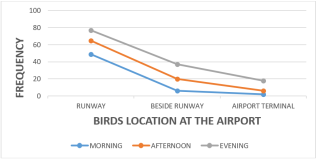
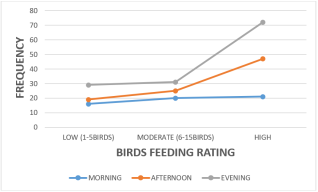
Photo-period was significantly recorded on birds location r=0.491 P=0.000 (
Figure 6), birds feeding activity level r=0.200 P=0.021 (
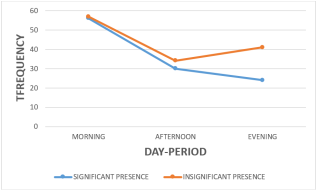
Figure 7), birds location during flight landing and takeoff routine operations r=0.445 P=0.000 (
Figure 8) respectively. Photoperiod plays a crucial role in shaping the behavior and location of birds, particularly in environments such as airports where human activity intersects with wildlife. Longer days can lead to increased activity and higher bird densities, raising risks during landing and takeoff operations. Understanding these dynamics allows for the development of effective wildlife management strategies that enhance aviation safety while accommodating the natural behaviors of bird populations. Photoperiod, defined as the length of daylight within a 24-hour period, exerts a profound influence on various aspects of avian behavior, particularly during critical periods such as migration, foraging, and breeding. Understanding these effects is essential for effective wildlife management strategies at airports, where interactions between aircraft and bird populations can lead to dangerous bird strikes. The relationship between photoperiod and foraging behavior is particularly relevant to airport ecosystems. Longer daylight hours during spring and summer enhance the availability of food resources, prompting greater foraging activity among aves such as gulls and crows
| [19] | Linnell, J. D. C., Anderson, S. H., & Doughty, R. W. (1996). The effects of temperature and food availability on the activity patterns of birds in an urban environment. Urban Ecosystems, 1(1), 41-51. |
[19]
. The presence of standing water and vegetation around airport perimeters can further attract birds, particularly species known to scavenge human food waste. As birds extend their foraging periods, they may become more active during dawn and dusk, times that coincide with critical landing and takeoff operations at airports.
Figure 6. Photo-period and Birds Location.
Photoperiod acts as a vital environmental cue for birds, influencing their physiological and behavioral patterns, including migration timing, breeding cycles, and foraging behavior
| [2] | Aschoff, J. (1981). Circadian clocks. Springer. |
[2]
. The lengthening days of spring signal many species to prepare for migration, while shortening days in autumn prompt their return to wintering grounds
| [16] | Gwinner, E. (1996). Circannual rhythms in birds. Journal of Experimental Zoology, 276(2), 160-171. |
[16]
. The influence of photoperiod on avian activity levels is significant: longer daylight hours often correlate with increased foraging and social activities, whereas shorter days can lead to reduced activity
| [15] | Hau, M., Goymann, W., & Ramenofsky, M. (2008). The role of photoperiod in the regulation of the avian reproductive system. The Condor, 110, 1-12. |
[15]
. These behavioral changes are particularly relevant for birds that inhabit airport ecosystems, where human activity intersects with avian habitats.
Figure 7. Photo-period and bird’s feedings level.
Birds are known to utilize photoperiod as a primary cue for migration. Many species, such as geese and shorebirds, exhibit heightened migratory behavior as days begin to lengthen in spring
| [20] | Marra, P. P., et al. (2017). Phylogenetic approaches to understanding migratory behavior in birds. Ecology and Evolution, 8(15), 7882-7895. |
[20]
. This increased activity can lead to a greater presence of birds near airports during migration seasons, raising the risk of bird strikes during takeoff and landing operations. According to
| [24] | Pulido, F., & Berthold, P. (2004). Microevolutionary responses to climatic change: an ecological and evolutionary perspective. Ecology Letters, 7(11), 175-183. |
[24]
, migratory birds are sensitive to the changes in day length, adjusting their migratory patterns accordingly. As daylight increases, birds often congregate at critical stopover points, including airports, where they can refuel and rest. This behavior presents potential hazards for aviation operations, as increased bird densities around airports can lead to a higher frequency of bird strikes.
Figure 8. Photo-period and Birds Location during Flight landing and Takeoff operations.
The increased activity and numbers of birds near airports during periods of extended daylight can significantly heighten the risk of bird strikes during flight operations. Studies have shown that bird strikes are more common during specific times of the day, often correlating with periods of increased avian activity due to longer day lengths
| [13] | Dolbeer, R. A., Wright, S. E., & Seamans, T. W. (2018). Wildlife strikes to civil aircraft in the United States, 1990–2017. Federal Aviation Administration. |
[13]
. Birds are more likely to be found in flight near airports during early mornings and late evenings, particularly in spring and summer when photoperiods are extended. This time is crucial for takeoff and landing operations, increasing the potential for collision events. Modifying landscapes around airports to make them less attractive to birds. This might include managing vegetation and reducing standing water, thereby decreasing feeding opportunities for migratory and scavenging species
| [28] | Washburn, B. E., & Blackwell, B. F. (2002). Managing bird hazards at airports. Journal of Airport Management, 1(2), 147-154. |
[28]
. Implementing visual and auditory bird deterrents during periods of high bird activity can help minimize avian presence around runways, particularly during dawn and dusk when bird strikes are more likely. Utilizing bird monitoring and surveillance programs to track bird activity patterns can inform airport management when to implement deterrent measures, particularly during critical periods linked to photoperiod changes. Engaging with local communities, wildlife agencies, and research institutions can provide comprehensive approaches to managing bird populations and their behaviors in relation to airport operations.
4. Discussion
Climatic conditions and the geographical location of airports significantly influence the types and abundance of bird species present, which in turn affects the risk of bird-aircraft collisions. Understanding these factors is crucial for effective wildlife hazard management at airports. Seasonal variations in temperature and precipitation patterns affect bird migration, breeding, and foraging behaviors
| [22] | Newton, I. (2008). The Migration Ecology of Birds. Academic Press, Waltham, Massachusetts. |
[22]
. For instance, tropical regions experience distinct wet and dry seasons that influence the availability of food resources, leading to changes in bird presence at airports. Extreme weather events such as hurricanes, floods, and droughts can disrupt bird habitats and force birds to seek refuge in and around airports
| [13] | Dolbeer, R. A., Wright, S. E., & Seamans, T. W. (2018). Wildlife strikes to civil aircraft in the United States, 1990–2017. Federal Aviation Administration. |
[13]
. Prevailing wind patterns influence bird migration routes, making certain airports along these routes more susceptible to increased bird activity during migration seasons
| [13] | Dolbeer, R. A., Wright, S. E., & Seamans, T. W. (2018). Wildlife strikes to civil aircraft in the United States, 1990–2017. Federal Aviation Administration. |
[13]
. Local wind conditions around the airport can affect bird flight paths and foraging behavior, increasing the risk of bird strikes during take-off and landing
| [9] | Chen, W., Zhang, Y., & Liu, X. (2024). Impacts of Urbanization on Bird Communities at Airports: A Case Study. Avian Conservation and Ecology, 19(1), 12-25. |
[9]
. Airports located near wetlands, rivers, or coastal areas attract waterbirds such as gulls, ducks, and herons, increasing the risk of collisions
| [11] | Cook, A. M., McDonald, R. A., & McCarthy, M. A. (2011). The Impact of Airport Operations on Bird Diversity and Distribution. Ecological Applications, 21(8), 3113-3122. |
[11]
. Airports near forests and grasslands may attract birds of prey, passerines, and other terrestrial bird species
| [5] | Bubb, T., Freeman, S. N., & McDonald, R. A. (2007). The Influence of Habitat Structure on Bird Diversity in Urban Areas. Urban Ecosystems, 10(3), 317-328. |
[5]
. Airports surrounded by agricultural land may attract birds that feed on crops or insects in the fields
| [6] | Burger, J. (1985). Coastal Waders and Waterfowl: Foraging Behavior and Management. In Bird Hazards to Aircraft: Research and Management (pp. 18-34). Clarke, Irwin & Company. |
[6]
.
Airports in urban areas may attract scavenging birds such as gulls and crows, which are drawn to human food waste
| [14] | Doughty, R. W. (1976). Competition for airspace: Bird-strikes and aircraft operations. Traffic Quarterly, 30, 449–67. |
[14]
. Airports in mountainous regions may experience unique bird migration patterns due to topographic features, leading to higher bird densities at certain times of the year
| [23] | Pennycuick, 2008: Pennycuick, C. J. (2008). Modelling the Flying Bird. Academic Press. |
[23]
. Coastal airports are often located along major bird migration routes and may experience high bird densities during migration seasons
| [20] | Marra, P. P., et al. (2017). Phylogenetic approaches to understanding migratory behavior in birds. Ecology and Evolution, 8(15), 7882-7895. |
[20]
. Modifying airport habitats to make them less attractive to birds, such as reducing standing water, controlling vegetation, and managing food sources. Using bird deterrents such as visual and auditory scaring devices, and employing trained personnel to disperse birds
| [4] | Brown, L. H., Hinton, T. G., & Wilkins, R. A. (2008). The Use of Habitat Management and Bird Hazards at Airports: Implications for Conservation and Airport Safety. Wildlife Society Bulletin, 36(4), 856-861. |
[4]
. Implementing bird monitoring and surveillance programs to track bird activity and assess the risk of bird strikes. Collaborating with local communities, wildlife agencies, and other stakeholders to manage bird populations in the surrounding areas
| [27] | U.S. Department of Agriculture. (2019). Wildlife Hazards to Aviation: A Comprehensive Management Strategy. USDA Animal and Plant Health Inspection Service. |
[27]
.
Climatic conditions play a crucial role in shaping the behavior and activity levels of birds, particularly in airport ecosystems where human activity intersects with wildlife. Understanding these dynamics is vital for effective wildlife management and minimizing bird-aircraft collisions. Warmer temperatures can enhance the metabolic rates of birds, leading to increased foraging activity. For instance, studies have shown that higher temperatures can result in longer feeding times for species like gulls and crows
| [19] | Linnell, J. D. C., Anderson, S. H., & Doughty, R. W. (1996). The effects of temperature and food availability on the activity patterns of birds in an urban environment. Urban Ecosystems, 1(1), 41-51. |
[19]
. Rainfall affects the availability of food resources. Wet conditions can lead to increased insect populations, providing abundant food for insectivorous birds. Conversely, heavy rainfall can limit foraging opportunities, influencing birds to seek alternative feeding grounds
| [22] | Newton, I. (2008). The Migration Ecology of Birds. Academic Press, Waltham, Massachusetts. |
[22]
.
Photoperiod, or the length of daylight, significantly influences avian behavior, including migration patterns, foraging activity, and overall location choices. Understanding these effects is crucial for managing bird populations around airports to mitigate the risks of bird-aircraft collisions. Photoperiod is a critical cue for migratory birds, signaling the right time to move to breeding or wintering grounds. As days lengthen in spring, many species, such as geese and shorebirds, prepare for migration, often leading to increased presence near airport. The activity levels of birds are closely linked to photoperiod. Longer daylight hours during spring and summer encourage increased foraging behavior as birds take advantage of the availability of food resources. Species such as gulls and crows may extend their foraging times around airports during these periods
| [19] | Linnell, J. D. C., Anderson, S. H., & Doughty, R. W. (1996). The effects of temperature and food availability on the activity patterns of birds in an urban environment. Urban Ecosystems, 1(1), 41-51. |
[19]
.
Food availability plays a crucial role in determining the movement patterns of birds around airports.
| [3] | Blokpoel, H. (1976). Bird Hazards to Aircraft: Research and Management. Traffic Quarterly, 30(4), 449-467. |
[3]
The types of food sources present can significantly influence bird behavior, foraging activities, and their overall presence in these environments. Many birds, such as gulls and crows, are opportunistic feeders and are often attracted to airports due to food waste from human activity. These scavengers tend to congregate in areas where food is readily available, increasing their movement near runways during landing and takeoff operations
| [6] | Burger, J. (1985). Coastal Waders and Waterfowl: Foraging Behavior and Management. In Bird Hazards to Aircraft: Research and Management (pp. 18-34). Clarke, Irwin & Company. |
[6]
. Insects are a primary food source for many bird species, particularly during the breeding season. Areas with abundant insect populations, often found in grassy or wetland habitats near airports, can attract insectivorous birds, influencing their movement patterns as they forage
| [11] | Cook, A. M., McDonald, R. A., & McCarthy, M. A. (2011). The Impact of Airport Operations on Bird Diversity and Distribution. Ecological Applications, 21(8), 3113-3122. |
[11]
. Airports located near agricultural fields may attract granivorous birds, such as doves and sparrows, especially during harvest seasons. The abundance of seeds and grains can lead to increased bird activity around the airport as they search for food
| [19] | Linnell, J. D. C., Anderson, S. H., & Doughty, R. W. (1996). The effects of temperature and food availability on the activity patterns of birds in an urban environment. Urban Ecosystems, 1(1), 41-51. |
[19]
. Proximity to water bodies can influence bird movement, as many species rely on aquatic food sources. Wetlands or ponds near airports can attract waterfowl and shorebirds, increasing their presence and activity levels in these areas
| [1] | Allan et al., 2018: Phillips, J. B., et al. (2018). Efficacy of Avian Radar Systems for Tracking Birds on the Airfield of a Large International Airport. Wildlife Society Bulletin, 42(4), 603-612. |
[1]
.

 ,
Esther Eyong Mbi Arrabi
,
Esther Eyong Mbi Arrabi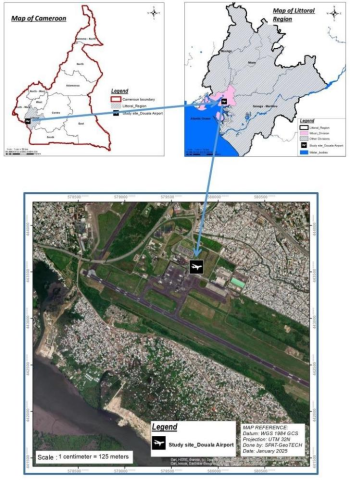



 Share This Article
 Twitter
 Linked In
 Facebook
 Copy
Copy Download